Sport
Skeleton Explained: How to Bet – Everything You Need to Know
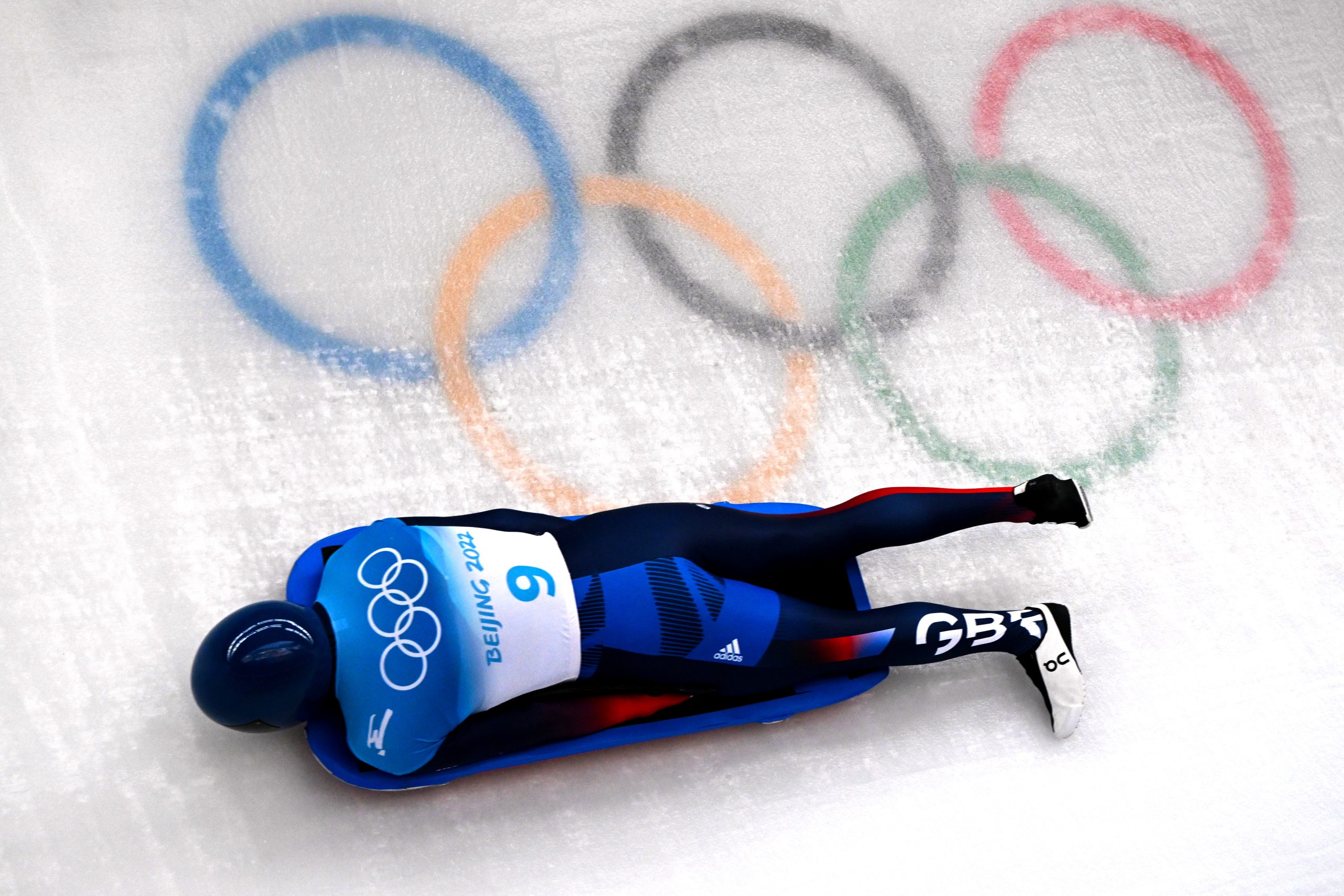


The Skeleton is one of the most enthralling and exciting Winter Olympic sports there is, with Team GB having a strong chance of winning gold at this year’s games.
Find out all you need to know about the sport and how to bet on it.
Skeleton is a Winter Olympics sliding sport in which a single athlete races head-first and face-down on a small sled along a frozen track. The track is the same one used for bobsleigh and luge, but skeleton is widely considered the most visceral and psychologically demanding of the three because the athlete’s head leads the way, just inches above the ice, at speeds that can exceed 130 kilometres per hour.
The sled itself is deceptively simple. Unlike bobsleigh, there is no steering mechanism and no brakes. A skeleton sled consists mainly of a compact frame and two polished steel runners that glide directly on the ice.
Steering in skeleton is one of the most technically demanding aspects of the sport. Athletes do not “turn” in any obvious way. Instead, they guide the sled using extremely subtle movements of their body. Slight pressure from a shoulder, a tiny shift in hip position, gentle pressure through the legs, or even minute head movements can influence the direction of travel. These adjustments are often so small they are invisible to spectators, but at high speed they can mean the difference between a clean, fast line and a costly skid or impact with the wall.
Read more on Team GB’s Best Medal Chances in 2026 here
A skeleton run begins not on the ice, but with a sprint. The start is crucial and can account for a large portion of the final time difference between competitors. Athletes grip handles on the sled and sprint alongside it for roughly 30 to 40 metres, driving it forward with explosive power. Wearing spiked shoes for traction, they accelerate as hard as possible before diving onto the sled in one smooth motion. A clean mount is essential. Any wobble, imbalance, or mistimed jump can immediately cost speed that is nearly impossible to regain later in the run. Because of this, skeleton athletes train extensively as sprinters, focusing on acceleration, leg strength, and coordination.
Once on the sled, the athlete lies flat in a highly aerodynamic position, keeping the body as still and streamlined as possible while navigating the track. Olympic skeleton tracks are refrigerated ice chutes, typically measuring between 1,200 and 1,600 metres long, featuring around 15 to 20 curves and a vertical drop equivalent to several storeys of a building. The curves are steeply banked and generate intense forces, sometimes exceeding five times the force of gravity. Each track has its own personality where some favour smooth, flowing lines, while others are highly technical and punish even the smallest error.
Olympic skeleton competitions are decided over multiple runs rather than a single descent. Each athlete completes four runs in total, usually split over two days, and the times from all runs are added together. This format rewards consistency as much as raw speed. One brilliant run cannot make up for a major mistake elsewhere, and a single crash or loss of control can effectively end an athlete’s medal chances.
As a betting medium, it is one of the most enthralling winter sports to have a bet on due to the high-paced nature of it. Currently, the GB team hold all the aces in the Men’s Singles betting with the two-time World Champion Matt Weston the 1/2 favourite over European Championship 2024 winner Marcus Wyatt at 9/2.
Check out the latest Winter Sports betting with William Hill here