NFL
NFL Transfer Window Explained: How Trades, Free Agency And The Draft Actually Works
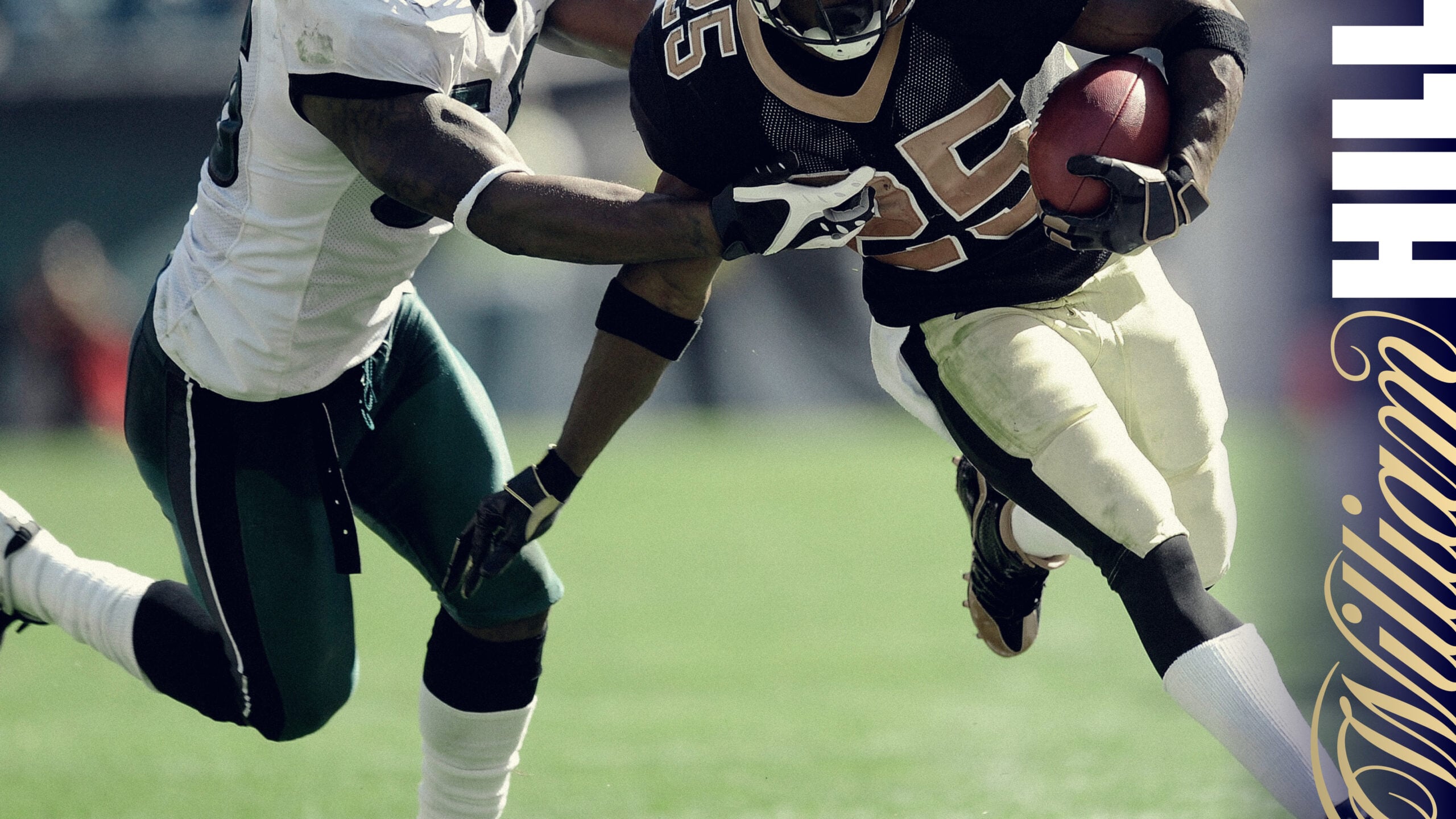
Unlike football, the NFL does not employ a transfer window and William Hill News discuss the important details regarding trades, free agency acquisitions and how the Draft works in this informative guide.
Teams function under a single trade deadline over the course of the regular season. For 2026, the trade deadline stands at November 10 by 4:00 p.m. Eastern Standard Time.
Why NFL teams don’t pay transfer fees
Player movement in the NFL takes place within a closed team system and the NFL draft. The NFL does not permit the kinds of player sales between clubs that are enjoyed in football.
What the salary cap changes
To figuratively level the playing field, the NFL enforces a salary cap for each team. Transfer fees would complicate this feature since set amounts of money are already in place for roster costs.
How this differs from football transfers
Conversely, in European football, transfer fees are major features of trades. Teams negotiate fees, paid to the club selling a player who is still under contract.
How do NFL trades work?
Trading players for draft picks
At its core, NFL trades involve swapping players and sometimes draft picks in order for one team to obtain a wanted player from another. A player can be traded for another player plus a draft-pick position.
Conditional picks and future considerations
Some freshly trader players are known as “conditional picks.” They are signed to contracts where in order for them to receive their full pay, they must complete a certain number of benchmarks that can include playing time, success of the team and roster status (in other words, whether or not they play on the starting 11).
What happens to the contract and cap-hit
When taking on a conditional pick, the acquiring team adopts the player’s previous contract and that payment applies to the salary cap.
The NFL draft, where teams actually get players
Draft order and why losing is rewarded
Before the start of an NFL season, college players are put into a draft and teams pick players for the coming season. The draft is held in an organized manner with the worst performing teams getting the earliest draft picks and being able to acquire the most promising players. In this regard, poor performance is rewarded.
The rookie wage scale
To prevent massive sums from being paid to players who are untried in the NFL, there are limits to what can be paid for draft picks. Draft picks receive a pre-ordained salaries. For example, in 2026, a player who goes in the first round will receive $9.921,000 for the season. One getting picked in the 32nd round or below will be signed for $2,939,748.
The minimum rookie salary in the NFK is $885,000.
Compensatory picks
According to Sports Illustrated, compensatory picks are draft picks reward to teams by the NFL. These are given to teams to make up for lost free agents – players who try on their own to make an NFL team. Sometimes players will stick around until their contract expires and then aim to not renew it. They can try walking on with other teams. In other instances, the contracts expire and they are not offered opportunities to renew.
NFL free agency explained
Unrestricted vs restricted free agents
Another way that NFL teams acquire players is that they sign on as free agents. But in the NFL, all free agents are not created equally, there are restricted free agents and unrestricted free agents.
An unrestricted free agent – who has four or more total seasons in the league and an expired contract – can sign with any of the 32 NFL teams and there is no compensation paid to the player’s previous team. Nor does the previous team have a right to top the offer and rope him back in.
A restricted free agent – who has three total seasons in the league and has an expired contract – can negotiate with any of the other teams. But the original team can top the new offer and automatically retain the player. If the original team does not match, it will receive compensation in the form of a draft pick.
The tampering period
The “tampering period” is a 2-1/3 day window, which launches at noon, two days before the start of the NFL season. Over this period of time, NFL teams can negotiate contracts with unrestricted free agents.
The franchise tag
The “franchise tag” is a rule that allows NFL teams to retain the services of a would-be unrestricted free agent for one season. During that season, the player will be paid a set salary.
The NFL trade deadline
The NFL trade deadline for 2026 is November 10, 2026, at 4:00 p.m. Eastern Standard Time. At that point, all NFL trades for the season must be completed.
The salary cap: the rule that ties it all together
The salary cap limits the total money that each team can pay to its roster of players.
Teams that don’t spend the salary cap in its entirety, which is currently set at $301.2 million, have left over money that is known as “cap space.”
When a player is no longer on the roster, but money from the salary cap has already been spent on him, that sum is known as “dead money.”
Because players get signing bonuses and teams don’t want that bonus to eat up too much of its annual salary cap, they spread the money out across the length of a player’s contract. This is known as “proration.”
NFL trading terms vs. football terms
Exchanging players: In the NFL, it is known as a trade. In football, it is known as a transfer.
Money exchanged: In the NFL, teams do not buy contracts in a straightforward way. In football, clubs exchange significant sums of money to buy contracts of players that are desired.
Trade agreement from players: In the NFL, players can get traded whether they like it or not. In football, players must agree to terms of the new contract before the transfer is completed.
Contract shifts: The NFL team acquiring a player gets the existing contract and must honor it. The football team acquiring a player from another club voids the old contract and negotiates a new one.
Financial differences: Salary caps in the NFL mean that all teams have the same limit on money spent to put together a roster. In football, there are no strict salary caps, but there are wage-to-revenue structures.
FAQs
Is there an NFL transfer window?
No. But he trade-deadline for this season stands at November 10, 2026, by 4:00 p.m. Eastern Standard Time.
Why does the NFL have no transfer window?
All teams function under a single deadline. The league does not allow for “open ended” trading. In part this is due to the complexity of plays that need to be learned and the challenges of adapting to a team’s playing rhythm.
NFL transfers explained: How do trades, draft-picks and the salary cap work?
NFL trades must be completed by November 10, 2026, at 4:00 p.m. Eastern Standard Time. Players are compensated via the same terms that they received on the previous team.
Draft picks are divvied out to teams so that the worst teams have the earliest picks and increase their likelihood putting together a competitive roster.
Salary caps restrict teams to no more than $301.2 million in player compensation for this season.