Football
The English Football League Pyramid Explained: From the Premier League to Sunday League
The English Football League pyramid is one of the most detailed football structures in the world, stretching from the global superpowers of the Premier League down to local amateur sides.
From 2026‑27 it becomes even more competitive at the top of the EFL, with a revamped Championship play‑off format set to keep more clubs dreaming of the Premier League for longer.
The top four levels: Premier League and EFL
At the summit sits the Premier League (Level 1), a 20‑team division where the bottom three are relegated each season. Directly below is the English Football League (EFL), made up of three 24‑team divisions:
- Championship (Level 2).
- League One (Level 3).
- League Two (Level 4).
In League One and League Two, the promotion/relegation rules remain familiar:
- League One: top two promoted, 3rd-6th in four‑team play‑offs, bottom four relegated.
- League Two: top three promoted, 4th-7th in play‑offs, bottom two relegated to the National League.
New look: Championship play‑offs from 2026‑27
The big change comes in the Championship. From the 2026‑27 season, the division will expand its play‑offs from four clubs to six, mirroring the National League’s format and ensuring the promotion race stays alive deeper into the campaign.
Under the agreed structure:
- 1st and 2nd are still promoted automatically as usual.
- Clubs finishing 3rd and 4th advance straight to the semi‑finals.
- 5th vs 8th and 6th vs 7th meet in one‑off eliminator ties, hosted by the higher‑placed team.
- The winners then face 3rd and 4th in the semi‑finals, which are expected to remain two‑legged, with the second leg at the home of the better‑ranked side.
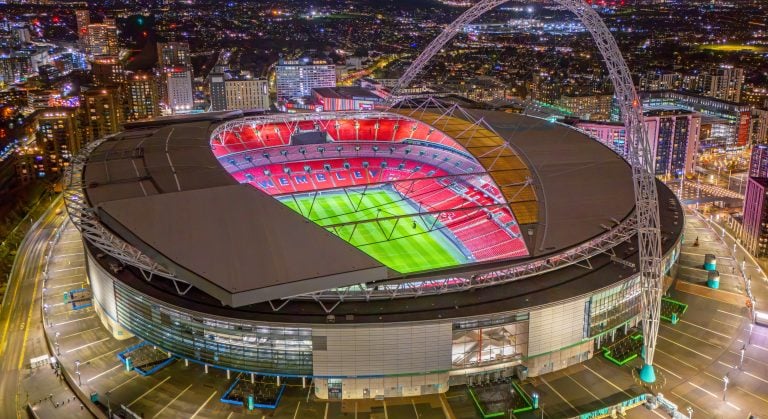
- The two semi‑final winners contest the traditional Wembley final for the third promotion spot.
EFL clubs backed the reform to keep more sides in contention for promotion and to reward higher league finishes with a clearer advantage, particularly for the team that ends the season in third place.
Non‑League: National League and below
Below League Two, the pyramid becomes “non‑league” but is still tightly linked to the professional game.
- National League (Level 5, Step 1) – 24 teams. The champions go up automatically to League Two; clubs finishing 2nd–7th enter extended play‑offs for the second promotion place. The league is lobbying for a third promotion spot to bring it in line with other divisions, though this has not yet been approved.
- National League North & South (Level 6, Step 2) – two parallel regional divisions of 24 teams each. Champions are promoted automatically, sides in 2nd-7th enter play‑offs for a second promotion place in each section, while four clubs drop into Step 3 each year.
From Level 7 (Step 3) downwards, the system spreads into regional leagues:
- Northern Premier League Premier Division, Southern League Premier Central, Southern League Premier South and Isthmian League Premier Division at Level 7.
- A web of eight Step 4 divisions at Level 8, then 16 Step 5 leagues at Level 9 and dozens more at county level below.
Each step has agreed promotion and relegation quotas so that, in theory, a well‑run club starting in a county league can climb the ladder all the way to the EFL and even the Premier League.