Premier League Predictions & News
Final One Standing Tips: Warning Signs for Man Utd, Sunderland and Spurs

One game doesn’t make a season. But it can reinforce concerns that were already there – and Ben Dinnery covers the early stages of the 2026/27 Premier League season for Final One Standing players.
The most interesting results from Round One weren’t necessarily the biggest surprises. In several cases, they reflected trends hidden beneath last season’s results: teams outperforming their underlying numbers, tactical weaknesses that remain unresolved, and clubs whose summer recruitment may not have addressed their biggest problems.
At the other end of the spectrum, there were signs that some of the strongest performers from 2025/26 may have become even better.
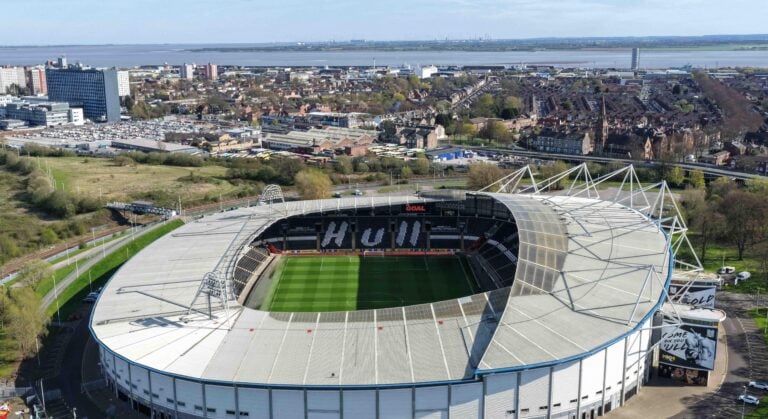
Manchester United: An Unsurprising (!) loss to Hull City
The Red Devils’ defeat to Hull may only be one game, but it exposed many of the same problems masked by their remarkable run of fortuitous results under Michael Carrick last season.
United dominated possession against the newly promoted side, recording 71.6% of the ball and taking 21 shots, yet lost 2-0.
The revealing number isn’t possession or even shot volume — it’s the quality of those attacks. United generated a paltry 1.83 xG, with three-quarters of their attempts (16 of 21) worth less than 0.1 xG. Remarkably, that’s worse than their already poor 0.104 xG per open-play shot under Carrick last season in 2025/26.
And this is where the result becomes particularly interesting.
United collected 39 points under Michael Carrick last season from 17 games, despite underlying metrics suggesting performances were only worth around 28 points. Their extraordinary overperformance (10.26) was the largest by far in the league over that period.
So, the warning signs were already there, and a largely disappointing transfer window hasn’t changed the squad sufficiently to address that, while there are also legitimate questions over Carrick tactically.
The performance at Hull was reminiscent of some of the problems that ultimately undermined him at Middlesbrough. Opta’s analysis of Carrick’s tenure highlighted that although Boro ranked highly for possession, shots, xG and successful passes, they struggled once opponents learned how to defend against their possession-heavy approach. A lack of cutting edge against low blocks and tactical inflexibility became recurring themes.
There are echoes of the Ole Gunnar Solskjær era here. Not stylistically, but in the scrutiny surrounding another Manchester United legend in the dugout. There appears to be such a desire to see one of Sir Alex Ferguson’s former players succeed that legitimate questions over their managerial ability can become secondary to the narrative.
Hull may have provided an early reality check.
Sunderland Struggles
I’m sceptical about the Black Cats’ ability to sustain last season’s remarkable campaign… What Sunderland achieved after their promotion from the second tier deserves enormous credit. They defended intelligently and played some excellent football, but the numbers suggest they should be a team fighting around mid-table, rather than one genuinely performing at European level.
The numbers are striking.
Sunderland finished with 54 points, more than 12 points above their expected metrics, with the bulk of their overperformance coming in defence, which had them sitting in the Top 4 for goals against (48) and clean sheets (11). And while Gameweek 1 is obviously far too early to declare a regression, there were warning signs.
The side had 62% possession and completed 549 passes at Ipswich, yet generated only 0.76 xG from 11 shots, eventually losing 2-1 to a late Jack Clarke goal. Last season, this is exactly the type of game in which Sunderland would have found a way to escape with a point.
If displays remain broadly similar but that enormous statistical overperformance disappears, then outsiders may perceive Sunderland as suddenly a poor side, when in reality results are simply converging with performances.
Another major complication this term will be the arrival of European football, and with it, the additional stresses placed upon the squad around a three-fixture week and the quick turnaround. Sunderland have gone from Championship football to Premier League survival, and now, continental competition in an extraordinarily short period.
I don’t expect a repeat of Ipswich at the beginning of the century — European qualification followed by relegation — because Sunderland should have enough to survive. Still, additional fixtures will stretch a squad never built to compete across multiple competitions.
That increases fatigue, rotation and injury exposure and, crucially, reduces the margin for error that allowed Sunderland to consistently turn tight games in their favour last season.
Spurs’ Spending
The worrying thing for Tottenham in Gameweek 1 was just how many of their old problems appear to have survived the summer. Despite significant investment, Spurs still looked remarkably Spursy, with uncomfortable echoes of Ange Postecoglou: plenty of attacking intent and endeavour, but very little quality — while leaving themselves horribly exposed defensively.
Spurs conceded the second-highest xG of the opening weekend, with Brentford generating 3.96 xG from 26 shots. In truth, the 3-0 scoreline could easily have been worse.
Questions are already being raised about whether Roberto De Zerbi’s tactical approach has become too predictable. His teams want opponents to press, creating the spaces they can subsequently exploit. When that press doesn’t arrive, they can struggle to manufacture those openings.
Spurs’ numbers perfectly illustrate the contradiction.
Tottenham recorded 18 pressing sequences, the most in the league, while enjoying 59.8% possession and producing 18 sequences of 10+ passes. Yet, ultimately, they gained almost nothing.
When Brentford attacked, Tottenham struggled to disrupt them. When Tottenham had possession, they struggled to hurt the Bees. That’s what makes the performance particularly concerning. The issue wasn’t effort; it was effectiveness, or a distinct lack of it, although the arrival of Sávio and Omar Marmoush should make their offensive play more efficient.
Spurs were running, pressing and dominating the ball. Still, the underlying numbers suggest they were losing where it mattered: in the duels, defensive actions and, most importantly, converting possession into genuine attacking threat.
Tottenham have spent heavily, but the opening weekend raised doubts about whether that investment has addressed their most damaging weaknesses: defensive exposure, vulnerability in duels and an inability to turn possession into high-quality chances.
Brentford are good, really, really Good!!
The Bees are becoming increasingly difficult to ignore.
Year on year, the club continues to improve through intelligent recruitment and subtle tactical evolution. After narrowly missing European football last season, last weekend provided early evidence that they could push even harder this time around.
The arrival of Mamadou Sangaré may prove particularly significant.
His two assists on his Premier League debut will grab the headlines, but his defensive contribution may ultimately be what makes him such an exciting prospect — potentially elevating Brentford to another level. Against Tottenham, Sangaré won possession seven times, more than any other Brentford player, while also creating two chances.
His previous numbers make that even more intriguing. During 2025/26, Sangaré ranked among the elite midfielders across Europe’s Big Five leagues for both total tackles per 90 and possession won in the middle third per 90. He therefore offers influence across multiple phases: winning possession, disrupting attacks and immediately turning those recoveries into opportunities.
But make no mistake — Brentford’s opening performance was about far more than one new signing. It was an outstanding collective display.
The Bees generated 3.96 xG, while producing an extraordinary 13 shots from set pieces — the most of any Premier League side across the opening weekend.
That is the hallmark of a well-coached team: dangerous in open play, aggressive without the ball and capable of exploiting situations that other teams treat as marginal gains. Brentford aren’t simply punching above their weight anymore. They might just be really, really good.
The common thread from Gameweek 1 is not that the opening fixtures have revealed each team’s destiny, but that it has tested whether underlying patterns still exist. United and Sunderland may find it harder to outrun their numbers.
At the same time, Tottenham must prove that investment has corrected structural weaknesses, and Brentford already look capable of converting sound recruitment and coaching into another step forward. The next few weeks will show whether these were opening-day anomalies or the first evidence of more durable trends.
*Odds subject to change – prices accurate at the time of writing*